
The Inhuman Neighbor
The Parallax ViewThis thread follows the book’s challenge to an ethics that imagines the Other only as a vulnerable human face.
increasing Bearing strength in each event
 decreasing
Bearing strength in each eventdecreasingThe Face as Ethical Appeal

Responsibility Begins With Another
A powerful ethical picture
The vulnerable face of another person calls the subject to responsibility. This account resists treating people as objects of knowledge or use.
A limit appears
The book asks whether the face-to-face encounter can include every form of human suffering. Some experiences exceed the familiar image of reciprocal recognition.
The Muselmann’s Facelessness
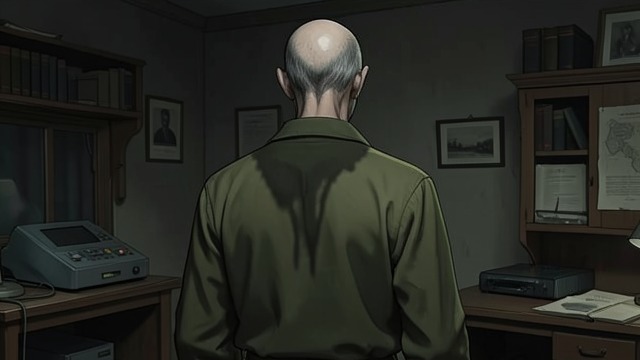
The Witness at the Limit
An impossible testimony
The Muselmann is described as a witness who has encountered the camp’s extreme horror but cannot report it. The figure exposes the limits of ordinary testimony.
No complete recipient
Survivors speak to listeners who cannot fully authenticate the experience. The witness and recipient are both structurally incomplete.
Beyond Empathy

A Relationship That Cannot Be Shared
Recognition fails
The faceless figure resists the empathic relation that ethical theory often presupposes. One cannot simply claim to share the victim’s experience.
Responsibility becomes harder
The failure of identification does not cancel obligation. It makes the ethical encounter more disturbing and less consoling.
The Neighbor as Thing

An Uncanny Otherness
More than a partner
The neighbor can appear as an impenetrable and disturbing presence rather than a reciprocal subject. Law may protect against this excessive proximity as much as it organizes care.
Ethics loses its comfort
The book refuses to domesticate the neighbor into a reliably good object of compassion. The Other can be both vulnerable and terrifying.
A Face That Loses Its Form
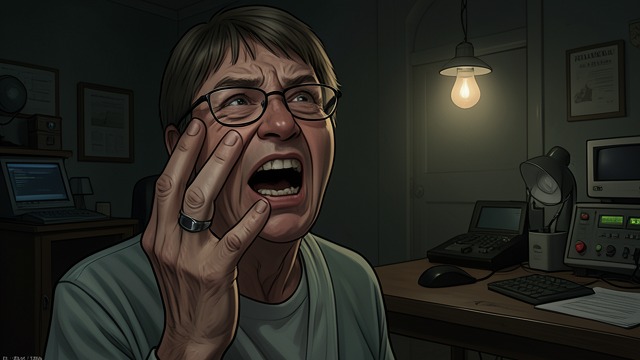
The Distorted Face
The mask falls
A distorted face or bodily tic can reveal a dimension concealed by the harmonious image of humanity. The disturbance is not merely an accidental blemish.
Inhumanity within the human
The book locates an excessive remainder inside human identity. Ethics must confront this remainder rather than simply exclude it.
Chapter 2, discussion of Levinas
Chapter 2, discussion of testimony
Chapter 2, after the account of Auschwitz
Chapter 2, discussion of the neighbor
Chapter 2, concluding reflection
